Human life demands dignity. It is the basis upon which almost all ethical traditions (religious or otherwise) are based upon. Life must be respected, given honour, and in turn, death too must be given its due - respect and honour.
Some deaths hurt us more than others, some deaths reach us at our very core. The loss of a parent, sibling or child is immeasurable. The Quranic statement that killing a single human being is akin to "killing all mankind" (5:32) is due to the value of that person to their family and friends; for a mother who has lost her child, none of the 6 billion plus human beings on earth can fill the void that was left by their son or daughter.
However, sometimes in death all we see is opportunity. Death becomes sanitised and we forget the pain and suffering it causes.
With regard to the terrorist attack in Norway - there is much to be said. Much to be said about the news corporations that covered it, the analysts that spoke about it, the reaction afterwards. Indeed there is also a lot to be said about the killer himself and his affiliations.
But I strongly feel that it can wait. What needs to be said can wait. The tradegy is barely a day old and already analysts and individuals are feasting upon it for their own purposes. For every child that was killed, there is a grieving parent whose life has been completely demolished. A moment of mourning needs be observed.
Likewise is the unfortunate trend of sanctimonious mourning. With the death of the celebrity Amy Winehouse - some feel outraged that a celebrity should be mourned when there are dead in Norway. Others comment that why should Norway be mourned while there is famine in East Africa. This feels to me disrespectful to all deaths involved. It is as if we completely forget the value of a human life, and have lost sense of what it means to truly mourn.
Death is the most human of all experiences, and touches all - religious and otherwise - as being the cusp of the very unknown. Analysis and post-analysis can wait a few moments; while we remember and respect the value of human life and afford it the dignity it deserves.
Saturday, 23 July 2011

Monday, 18 July 2011
The Life of Muhammad: Mixed Reactions

From what I gather from my non-Muslim friends on Twitter, Facebook and face-to-face interactions – all are very much enjoying the BBC’s Life of Muhammad documentary.
From what I gather from my Muslim friends on Twitter, Facebook and face-to-face interactions – all are very much disappointed at the BBC’s Life of Muhammad documentary.
It is wonderful to have a generally sympathetic portrayal of the Prophet Muhammad on national TV in a prime-time slot. A great opportunity to share the man and message so close to the heart of billions of Muslims.Yet it still isn't quite right. Several things just fail to hit the mark.
The first is its insistence on linking modern day events with the biography. Yes, the Satanic Verses, 9/11 and the Israel-Palestine conflict are all important issues regarding Muslims today. But you can’t miss out 1400 years of history. Quite obviously the Israel-Palestine conflict has more to do with the millions of Palestinian refugees that lost their homes and land upon the creation of the state of Israel in 1948 than al-Israa wal-Miraaj (the Prophet's journey to Jerusalem and beyond). Something that isn’t conveyed in the documentary.
An older American documentary, Muhammed: Legacy of a Prophet did the same thing. But instead of contextualising the life of the Prophet with 9/11 or such, it used the day to day lives of modern Muslims – doctors, lawyers and so on. To hear from Muslims about how a specific event in the life of the Prophet resonated with them, or made them who they are felt more intimate and more meaningful. It also made a lot more sense then trying to link complex global issues to a single incident from the life of the Prophet.
The next issue is the choice of commentators. One commentator was Robert Spencer, a very well known anti-Islam commentator who founded and runs the website Jihad Watch. To give you a sense of Jihad Watch’s paranoia – it accuses a dodgy kebab shop in Cardiff of being al-Qaeda trained terrorists. Like seriously, click the link, they actually say it! And this guy is a commentator on the show? Bizarre. The line up also includes Nonie Dariwsh, Director of Former Muslims United. An ex-Muslim was given more speaking time on the Prophet Muhammad than Tariq Ramadan, a prominent Muslim scholar.
I can totally understand the need for impartial and unbiased (if such a thing exists) commentators, in the form of academics and experts – but how can Robert Spencer and Nonie Darwish be justified?
A final issue that bugs me is choice of content. You have 23 years during which the Prophet Muhammad was active as a preacher and reformer of society. In a documentary of three hours, there is naturally a need to highlight certain important incidents; so no one expects everything to be covered.
But for many Muslims, this documentary misses out a lot of the important stuff. Important first in understanding who was Muhammad, and important in understanding who are Muslims.
For example, the suffering and persecution faced by the Prophet in Makkah is mentioned only in passing. Yet this shaped so much of the Prophet’s experiences, and is such an important aspect of the Prophetic story for Muslims. In the face of torture and punishment, all the early Muslims stood steadfast in their faith, adhering to the Quranic injunction of ‘sabr’, patience. To overlook this is to miss the foundation of the Prophetic biography.
Another aspect I was looking forward to in the second part of the documentary, that was barely mentioned, was how the Prophet united the tribes of Madinah. So much of the Islamic understandings of unity, brotherhood (of humanity and Muslims), sacrifice, asceticism and so on stem from the importance of Madinah, yet it was barely looked at.
Instead the documentary tends to focus on the controversial. When discussing Makkah and the Constitution of Madinah, the documentary is keen to mention historians who argue both didn't even exist. When it comes to the controversial issues however, the Banu Quraizah for example, the documentary seems less concerned with historical debate and is content to accept a single narrative around the issue.
Finally, a documentary that tries to look at the life of the Prophet but that omits his relationship to God will always fall short. Even from a critical, atheist position; his relationship to God is paramount to understanding the Prophet. Karen Armstrong is the one commentator who reminds us of this. She understands how central it is to the story.
Overall, it still feels like this documentary is struggling to break free of Western Orientalism. The issues it focuses on, the way the Prophet is presented, the questions asked; they all mimic previous Orientalist studies of the Prophet.
Yet ultimately, I have to remind myself and perhaps other Muslims that this documentary is step in the right direction. So little knowledge exists in the public realm about the Prophet Muhammad, that anything is better than nothing.
Wednesday, 6 July 2011
Islamism: What are you talking about?
There is one word that has become increasingly popular in media, political and academic discourse of late – Islamism.
No other words however annoy me as much.The word is redundant. It can mean absolutely anything.
In media and political discourse – Islamism is pretty much synonymous with “bad Muslim” – the evil, extremist, terrorist, ‘fanatic in the attic’ Muslim; more often than not, it is used as a slur.
In more refined quarters, it is used to refer to the Muslim Brotherhood and groups inspired by it, or used as an equivalent to the equally pointless term ‘political Islam’.
The fallacy of Islamism is perhaps best demonstrated by Wikipedia, which hosts no less than nine definitions.
At its mean – a word should convey some shared understanding to allow communication of ideas between people. Islamism does not fulfil this criterion.
If Islamism is the philosophy and ideas of the Muslim Brotherhood, then it needs to be restricted to this and not diluted by refering to a host of other groups with sometimes radically different beliefs than the Brotherhood (for example, Saudi Arabian Salifiyyah are often referred to as Islamist despite stark differences).
If Islamism is to refer to ‘political Islam’ then this should be done with integrity and intellectual honesty. ‘Political Islam’ can not be considered a new movement (as if Islam has made no political claims prior to the twentieth century). Nor can it be restricted to describe only one end of the political spectrum. To be sincere in this definition then, we must also describe British Muslims for Secular Democracy as Islamists.
Finally, if Islamism is to refer to the bogeymen of Islam as it is often in the media and even our Prime Minister, then we must have an honest conversation about what ‘Islamism’ is and what makes it a problem. It is unacceptable to bandy about Islamism as a slur and an insult with no further thought, simply replacing Marxist/Marxism as the new threat to modern society.
Ultimately, I think academia, the media and polity would do better to abandon the word altogether – though I welcome someone to prove me wrong.
Monday, 6 June 2011
Time for the truth about Terrorism
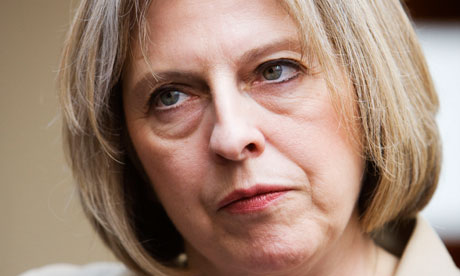
The government is soon to present and release its new counter-terrorism PREVENT policies, headed by Theresa May.
Early signs seem to indicate that the government is yet to face the clear and obvious truth about what it deems to be ‘violent extremism’.
It still seeks to place it as being a religious problem (thus terming it ‘religious extremism’).
Sloppy language is employed about the motivations of terrorists – ‘they hate our way of life’, ‘they hate our freedoms’ claim politicians and pundits.
Focus is repeatedly put on the Muslim community for not doing enough to tackle extremism. The government asks academics and doctors to spy on their students and patients.
Millions of pounds of funding has been thrown carelessly at tackling extremism, giving rise to a anti-terrorist industry with self-proclaimed experts awarding themselves £80,000 salaries and creating a competitive environment where each organisation decries the other in attempts to get a bigger share of the pie.
All this because the government refuses to acknowledge the most basic and obvious fact about terrorism. Something that is clear and common knowledge to not only the Muslim community, but to MI5 bosses and CIA advisors. Yet the government (whether Labour or Conservative, Bush or Obama) refuses to accept the evident truth.
Terrorism (itself a messy ill-defined word) is the result of, motivated by, and seeks to end,  Western imperialism. Terrorist groups only make sense as anti-colonialist movements.
It is not a religious movement, but it articulates itself in the dominant social medium of religion. Terrorism, which I prefer to call theologically justified political violence, is just that. It is political violence, its aim is to achieve a political result. It is not born out of a religious belief, but uses religion to justify itself in a social context where all claims, to be taken seriously, must be religious.
In the recent Arab Spring, the double standards of the governments of Britain and the USA were made clear. While hundreds of thousands took to the streets of Egypt against Mubarak, the USA was shamefaced about its $3,000,000,000 annual funding to the Egyptian Army which killed Egyptian protestors.In Libya, Britain suddenly switches sides to support the revolutionaries fighting against Gaddafi. Gaddafi’s forces meanwhile use military equipment sold to them by Britain against its own people.
This is in a wider context of military occupation of Iraq and Afghanistan, in bloody wars that 'raised [the] terror threat' rather than reducing it.
To begin tackling the threat faced by extremists in earnest, the British government, Theresa May, David Cameron and like must all own up to the cause of terrorism. It is perhaps best said in the words of Michael Scheuer, former head of the CIA's Bin Laden Unit: -
Mr Scheuer said: "We are being attacked in the west and we will continue to be attacked in the west as long as we are in Afghanistan, as long as we support the Israelis, as long as we protect the Saudi police state.
In the rhetoric of our enemies there is very little, if anything, about attacking us for how we live or how we think or how we act in our own country.
It is about intervention, it is about being in the Arab Peninsula and it has nothing to do with these cultural things."
Saturday, 9 April 2011
Some Reflections

It’s almost exactly a year since the passing of a very dear brother, Aamir Siddiqi.
Aamir was only seventeen at the time; he had been accepted to study Law in Cardiff University and had a bright future ahead of him. Many people in Cardiff knew him, and all who knew him respected and liked his kind and honest nature.
On Sunday 11th April 2010, he was killed in his home. He answered the door, expecting his Arabic teacher as usual, but instead two men entered his house, stabbed Aamir to death and injured his elderly parents who were also present. They ran away leaving Aamir to die. Two men were later arrested, with a third still being sought in connection with the murder. The killing was senseless, a case of mistaken identity.
It’s incredibly painful to write about this, painful even more thinking of his parents and family who the lost the apple of their eyes and must be keenly aware of the time since his death.
As always, there is only one thing to say when reflecting on the passing of a human soul. “Surely we are from God, and to Him we return”. The statement is neither a sober statement nor one of sadness. It’s a statement of hope. Our primordial origin is not except with “the breath of God” who created us, and our home and final destination is to return to our origin – of closeness to the transcendent one beyond all description.
There are so many lessons we can take from Aamir’s death, and many that I’ve learnt. I wanted to share some of them.
The days after his death, I was struck with one major regret. I am not usually the type to have regrets, but this regret was one that took me some time to recover from. I knew Aamir from SOBIS (School of Basic Islamic Studies). I teach there, and he had studied there from a young age. In the months before his death, I would often see him and greet him and speak briefly, but never fully. Aamir had a beautiful character, and he would take interest in other people. He knew I studied theology at University, and would often ask me questions about it; I suspect partly out of interest (he was the very definition of a polymath) and partly out of politeness and courtesy. I remember quite a few times in the months before his death he asked me about my opinion on materialism, and I never answered the question. I would always respond with something along the lines of ‘another time’, distracted by whatever needed to be done next in the busy and hurried environment of SOBIS. It seems like a silly regret to not answer a question, but he had asked me several times, and I always expected another opportunity to arise. It wasn’t that the answer was important (I don’t even think I have an opinion on materialism), but I regret not taking the time to just talk and spend time with Aamir, even if it was just for a few minutes. My exchanges with Aamir for too long consisted of brief ‘salaams’ and casual quick conversation. Having lost the opportunity to do so with Aamir, I have tried my best to stop having the empty conversations you have in a day, and make the most of every exchange. Even if it’s simply to say “peace be upon you/asalaamu alaykum” with sincerity – not as a mindless greeting but a genuine wish for good upon that person.
The Prophet Muhammad (peace be upon him) taught us that “death is a sufficient as admonition”, meaning that the person who reflects upon the phenomena of death is certain to learn the lessons needed for success in this life and the next life. We construct around us a sense that death is a distant destination, one that doesn’t quite apply to us. We entertain what certain scholars define as the ‘long hope’ – others will die but not myself – somehow I’ll live forever. We rarely focus upon our end destination, and thus our purpose in this life. Life is the longest thing we know, yet the few decades we may live on this earth seem so short. In April last year I was in the midst of my final year essays and revision. I was working full-time, and studying full-time, and so life consisted of early starts and late nights. After I found out about Aamir’s death, and after the initial rush of emotions had passed, I returned to my desk and continued working on my essay feeling utterly numb. Studying and working and all that I did seemed suddenly very very futile. I was so busy during that time, ‘filling the unforgiving minute with sixty seconds worth of distance run’, yet the simply question of where I was running to suddenly fell into sharp focus. I had said, as soon as I heard of Aamir’s death, ‘surely we are from God, and to Him we return’, but I knew I was far from internalising the belief. A year after Aamir’s death, I find myself sitting again at a desk with half a dozen books by my side with an essay deadlines approaching. I’ve certainly travelled the distance of a year, but I fear whether I’ve travelled any distance closer to God, and whether I’ve truly let go of the ‘long hope’ that although others die, I won’t. Thinking of Aamir always reminds me that he was my friend and my peer in this life. His time was simply slightly ahead of mine, but I’m soon to follow. I have the benefit of life yet on this earth, and God knows how long it will. For myself and for others, Aamir should remind us that our life is simply a few years granted to unravel the mysteries of our soul and grow as close to God as we can.
In focusing on Aamir’s death, I hope I have done him no injustice. He was someone full of life. Some of the best memories I have of Aamir will always be from filming a video produced for one of SOBIS’s annual functions. If you can spare ten minutes, I’d encourage everyone to watch. It features Aamir and his classmates and I think it shows some of his wonderful character, if ever so briefly. The video is called 'What Does Islam Teach You?'
If you’re reading this, I hope you’ll take a few moments to read al-Fatiha for Aamir, and pray for him and his family. I have witnessed daughters bury their mothers, and sons bury their fathers, and the agnony that is causes. But I have only ever once seen a mother and father bury their son and Aamir’s parents did so with such dignity and strength of character that I am left in awe. May God strengthen them and their family now and forever, for what is such a difficult time.
I do pray that when I pass, I am reunited with Aamir in the best and most blessed of places, and that we finally have that discussion about materialism – which I imagine will be ever the more interesting with the benefit of retrospect.
Monday, 4 April 2011
The 'Atheist Bible'
Just read an interesting article on the BBC on 'The Good Book' written by Humanist Anthony Clifford Grayling.
It is an effort to be applauded, anything that tries to illuminate on the human struggle to be good is certainly valuable.
But I'm amused by its description as an 'atheist bible'. I thought at first it was the BBC journalist who had simply used the phrase to get attention, but the book is actually subtitled 'a Secular Bible'.
You could quite easily think that atheists are doing their best at emulating the structures and symbols of religion. I have more than once heard Richard Dawkins being called the 'prophet of atheism' by atheists. I remember the Atheist and Agnostic Society in my university trying to organise 'Atheist Awareness Week' in direct emulation and competition with the Islamic Society's 'Islam Awareness Week'.
It seems as if atheism is becoming a religion without a God. Which is made even more ironic by the fact that most atheists say their gripe isn't with a 'God' (who may or may not exist) but with organised religion. The direct imitation of organised religion then is quite contradictory.
Finally, what I'm most suprised by is that atheists/secularists have not made greater attempts at distinguishing themselves from religion, and from avoiding religous terminology and structures. After all, imitation is sincerest form of flattery.
It is an effort to be applauded, anything that tries to illuminate on the human struggle to be good is certainly valuable.
But I'm amused by its description as an 'atheist bible'. I thought at first it was the BBC journalist who had simply used the phrase to get attention, but the book is actually subtitled 'a Secular Bible'.
You could quite easily think that atheists are doing their best at emulating the structures and symbols of religion. I have more than once heard Richard Dawkins being called the 'prophet of atheism' by atheists. I remember the Atheist and Agnostic Society in my university trying to organise 'Atheist Awareness Week' in direct emulation and competition with the Islamic Society's 'Islam Awareness Week'.
It seems as if atheism is becoming a religion without a God. Which is made even more ironic by the fact that most atheists say their gripe isn't with a 'God' (who may or may not exist) but with organised religion. The direct imitation of organised religion then is quite contradictory.
Finally, what I'm most suprised by is that atheists/secularists have not made greater attempts at distinguishing themselves from religion, and from avoiding religous terminology and structures. After all, imitation is sincerest form of flattery.
Tuesday, 8 March 2011
Reclaiming Jihad

What comes to your mind when you think of jihad?
You would be forgiven if it didn’t have positive connotations. The media and public discourses around jihad are framed by acts of political violence and killing, such as September 11th 2001.
The Muslim community have tried to correct such a gross misunderstanding of the word. They spoke of how jihad means struggle, a struggle for righteousness, justice and mercy. They spoke of how mindless killing could not be more divorced from the spiritual endeavour (both internal and external) that is indicated by the word jihad.
Jihad has so overwhelmingly been associated with violence and killing, that Muslims sometimes refer to it as the J-word, conscious that its very mention can cause concern.
But now it’s time to redefine jihad. To reclaim jihad.
When you think of the crowds in Tunisia, who changed global politics forever by ousting Ben Ali, think of jihad. When you think of the Egyptians, who through patience and adversity stood united and defiant in the face of a stubborn Pharaoh who fell like Ozymandias, think of jihad. And indeed, when you think of Libyans, who confront a dictator more than willing to kill his own people, think of jihad.
In fact, don’t just think of jihad. Think of the highest, most celebrated, most beloved, type of jihad. Think of the very pinnacle of the meaning of jihad.
This is not a matter of subjective opinion, but of theological truth.
The Prophet Muhammad (peace be upon him) said:
“The best jihad is to speak a word of truth in front of a tyrant ruler”
Every protestor took part in fulfilling this deeply profound prophetic teaching, and went to the very core of the meaning of jihad.
Every placard held in Freedom Square was ‘word of truth in front of a tyrant ruler’. Every blog written, every chant, even the moments of silence met the criteria.
Now, more than ever we should be reclaiming the beautiful word that is jihad.
NB: For those interested in the reference for the hadith, its quoted by several muhadith including Ibn Majjah on the authority of Abu Saeed, Ahmed and Ibn Majjah and Tabarani and Baihaqi on the authority of Abu Umamah and Ahmed and Nisa’i on the authority of Tariq Ibn Shihab.
Subscribe to:
Posts (Atom)