This is a thick book, and probably one I could never read in a day. Thankfully I had read about half prior and had a good idea of which thinkers I need to read.
It's a useful introduction to human geography (the discipline from which most the thinkers come from) as well as a philosophers, anthropologists, religious studies scholars and political theorists (oh, and a few economists).
For each other it provides a biography overview, key ideas, their unique contributions to space/place, and a list of key works. For someone, like me, who was trying to get an understanding of a field that wasn't his own - it was incredibly useful.
It's also a good reference book - quite often a journal or another book will reference, in passing, someone's thoughts or ideas on a particular issue in the field. Naturally, wikipedia isn't of much help here and I'm not keen on spending time trying to find their key works to get a feel of what is being referred to - as such, a quick dip into Key Thinkers on Space and Place helped contextualise whatever I was reading.
I'd really recommend it for anyone doing qualitative social science research. The emphasis in qual research often ends up on the people, the words, the actions -divorced from the setting in which it takes place. This book is a reminder that such thinking is misleading. It means we imagine the world as a blank canvas upon which social interaction 'happens'. This unspoken theory means we imagine an action can happen here, or there, with few changes. The argument many of the theorists in this book put forward is that space/place is inextricably linked to social action and agency. Not only in influencing it, but being influenced by it.
We attribute, or perhaps inherit, meaning from places and spaces. We transform them and react to them. One theorist argues the importance of space/place is in that space, is by virtue, limited. One thing can be at one place at one time. Yet the meanings attributed to place are infinite.
The books only drawback, I felt, was its size and its diverse authors. Not every author had the same skill in summarising succinctly a theorisers work. Sometimes I would leave a section feeling an author had conveyed the ideas of a key thinker well, giving me a tangible new idea or theory to take away with me. Other times I completed a section feeling empty-handed, and no better informed on a thinkers ideas or contentions.
That said - great book and one worth reading if you're trying to get a grasp of the field, as I was.
Thursday, 31 July 2014

Wednesday, 30 July 2014
Day 1 - Rhythmanalysis
Rhythmanalysis – Time and Everyday Life

By Henri Lefebvre
Published by Continuum, London: New York - 2004
Lefebvre is a Marxist scholar, one noted for his
contributions to sociological understandings of space, the everyday and cities.
The introduction to this work, by Stuart Elden, notes it is
Lefebvre’s final publication prior to his death (he was born in 1901 and died
in 1991), and unites much of his prior thinking. ‘Lefebvre shows the
interrelation of understandings of space and time in the comprehension of everyday
life’ and the importance that the two concepts of space and time ‘need to be
thought together rather than separately’ (pg vii). Space-time is already a
singular concept in certain (all?) strands of physics – Lefebvre’s argument,
perhaps unwittingly, picks up on this.
The author spends sometime considering the nature of rhythm
itself, with sometimes difficult prose that slips jarringly into the poetic. I
wonder whether it works better in the original French? Lefebvre is one of many
French philosophers whose impact in the social sciences is colossal – he takes
his place alongside Bourdieu and Foucault.
The author’s key arguments on rhythm is that they are a
product of repitition, and measure, they are mechanical, yet organic. Rhythms
can be cyclical (cosmic) or linear (the daily grind). They dominate our lives –
from our biological to the social. True to his Marxist ontology, Lefebvre
maintains: -
“The commodity prevails over everything. (Social) space and
(social) time, doinated by exchanges, become the time and space of market...
The everyday establishes itself, creating hourly demands, systems of transport,
in short, its repetitive organisation” (Pg 6).
The most valuable chapter, I found, was his description of
the street. He argues one cannot appreciate the rhythm of the street while
walking down it (“He who walks down the street, over there, is immersed in the multiplicity
of noises, murmurs, rhythms” Pg 28) but rather by being within and without,
such as standing on the balcony of house on the street, one can take the
necessary distance to view and appreciate the rhythm.
Lefebvre describes how the street’s rhythm cannot be viewed
simply as random, but an indication of a wider and deeper structural origin. It
is here that the transcendental can meet the mundane for the author. By
understanding rhythm, you can understand more fully the object of study.
The author concludes with a summary of his terminology (in
some cases, borrowed from biology). There is Eurhythmia, the natural rhythms of the human body in harmony (like
‘garland’ or a ‘bouquet’ writes Lefebvre in his distinctive style) and opposite
that, Arrhythmia, where the rhythms
conflict. There is also Isorhythmia, where several rhythms exist in equal
measure.
Rhythmanalysis is a relatively old work, and I’m keen to see
how others have built upon it. It’s been on my to-read list for some time. My
research is on British Mosques, and the everyday religious life of an observant
Muslim is absolutely linked to rhythms - some obvious, some not so obvious. I
sense Lefebvre’s writing will have considerable utility for me.
30 books, 30 days?

I have a lot of reading to get done this August however. Among other things, I want to use this month to cover some old ground. I did my undergraduate degree in religious studies, and I'm currently a PhD student in the religious studies department of Cardiff University - but over the past two years I feel I've lost my moorings somewhat. As my PhD employed a particularly social scientific approach, I've spent a lot of time trying to play catch up in sociology (or anthropology... still trying to work out what the difference is to be honest). So this month, I'll be picking up some intro texts to religious studies to make sure I know my basics.
Also, I really want to make sure I make the most of the next year - my final PhD year and, provided I do things right, my final year as a student. So also on my reading list are books on writing and completing my PhD.
The crux of this blog post however? I'm going to try and read 30 books in 30 days. I'm not a bad speed reader, and I think I've developed an ability to pick up and read the most important parts of a book while skipping the non-essential (to me) parts.So each day for the next 30 days, I'll publish a blog post summarising the book I read that day.
I'm hoping that by committing myself (publicly) to reading and publishing - I'll manage to keep up the pace needed. On top of that - I'm a believer in the importance of writing as much as I read, and it's always nice to have someone read what you've written.
My reading list as it stands is below, I welcome any additions however.
1. Guide to the Study of Religion - Ed Willi Braun and Russel T McCutcheon
2. Authoring a PhD -Patrick Dunleavy
3. Critical Terms for Religious Studies - Ed Mark C Taylor
4. The Arts Good Study Guide - Chambers and Northedge
5. Approaches to the Study of Religon - Ed Peter Connolly
6. Stylish Academic Writing - Sword
7. Introduction to the Sociology of Religion - Furseth and Repstad
8. Key Thinkers on Space and Place Ed Hubbard, Kitchin and Valentine
9. Rhythmanalysis by H Lefevrbe
I welcome any suggestions on further reading. My PhD is rooted in religious studies and the social sciences, with a focus on British Muslim studies - but I'm open to reading outside of that particular field if it will be useful.
If you would like to keep updated - have a look at the little things on the right of your screen where you can subscribe by email and contact me. Or follow me on Twitter via @abdulazim.
Monday, 3 December 2012
Soft Carpets - am I the only one?
You know that feeling when you hear nails on a blackboard, or a fork against a plate, that sound that goes 'right through' you?
Well I get that with soft carpets. Any soft material really. I can barely stand to touch fleece. Woolen jumpers too.
This isn't much of a problem. I just don't wear fleeces, avoid wool and generally all is well. Except in one scenario. Soft carpets.
Soft carpets give me no choice about where I put my feet. The desi etiquette of not wearing shoes in the house mean I'm often forced to feel soft carpets or be unforgivably impolite and keep my shoes on. But again, I don't spend that much time in other people's homes so it is a minor inconvenience at most.
But by far the biggest problem is the Muslim pre-occupation with soft materials for places of worship.
As a child, erroneously convinced that prayer could only be made on a prayer mat (almost all of which use some soft velvet type material) I avoided prayer simply because I didn't want to touch the prayer mat. Once my parents finally understood this, my mother very kindly brought me a cotton prayer mat (one I still use to this day even though I've outgrown it by a few feet).
So again, I've found strategies to deal with soft prayer mats and all is well.
Except for mosques. Mosques insist on soft prayer mats as some bizarre indication of the importance of prayer or something. And generous donors who provide mosques with luxurious, deeply woven, soft, carpets mean any mosque (even the humble 'house mosque') can install them.
I can't explain how much anguish this causes me. Not all mosques have them, some have a thinner, coarser, material that provides no problem.
But the majority of mosques have soft carpets.
This means I often have to mentally prepare myself before going to a mosque. During Ramadan, when I expect to spend more time in a mosque, I usually wear leather socks that shield me from directly touching the carpet (although I still have to ensure I only 'lightly' touch it with my hands).
In 24 years however, I have never found another person with the same problem.
I need a support group. Moral encouragement. Something. Anything.
Has anyone else had the same problem but overcome it?
Anyone?
Well I get that with soft carpets. Any soft material really. I can barely stand to touch fleece. Woolen jumpers too.
This isn't much of a problem. I just don't wear fleeces, avoid wool and generally all is well. Except in one scenario. Soft carpets.
Soft carpets give me no choice about where I put my feet. The desi etiquette of not wearing shoes in the house mean I'm often forced to feel soft carpets or be unforgivably impolite and keep my shoes on. But again, I don't spend that much time in other people's homes so it is a minor inconvenience at most.
But by far the biggest problem is the Muslim pre-occupation with soft materials for places of worship.
As a child, erroneously convinced that prayer could only be made on a prayer mat (almost all of which use some soft velvet type material) I avoided prayer simply because I didn't want to touch the prayer mat. Once my parents finally understood this, my mother very kindly brought me a cotton prayer mat (one I still use to this day even though I've outgrown it by a few feet).
So again, I've found strategies to deal with soft prayer mats and all is well.
Except for mosques. Mosques insist on soft prayer mats as some bizarre indication of the importance of prayer or something. And generous donors who provide mosques with luxurious, deeply woven, soft, carpets mean any mosque (even the humble 'house mosque') can install them.
I can't explain how much anguish this causes me. Not all mosques have them, some have a thinner, coarser, material that provides no problem.
But the majority of mosques have soft carpets.
This means I often have to mentally prepare myself before going to a mosque. During Ramadan, when I expect to spend more time in a mosque, I usually wear leather socks that shield me from directly touching the carpet (although I still have to ensure I only 'lightly' touch it with my hands).
In 24 years however, I have never found another person with the same problem.
I need a support group. Moral encouragement. Something. Anything.
Has anyone else had the same problem but overcome it?
Anyone?
Monday, 27 August 2012
Citizen Khan: A Step Backwards
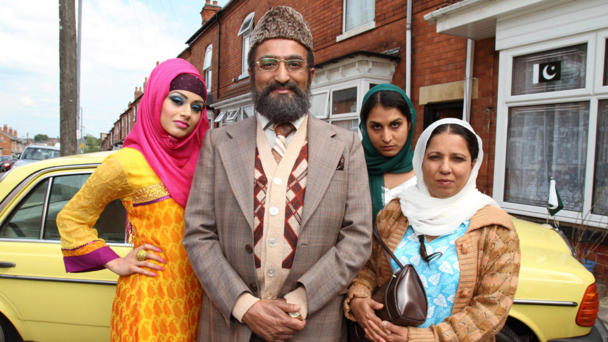
The BBC recently aired its latest sitcom, Citizen Khan, centered around the exploits of Mr Khan, a Birmingham based Pakistani Muslim ‘community leader’. I’ve seen snippets of the character (played by Adil Ray) in sketches and comedy shorts available online, as such I didn’t have high expectations for the show.
Having seen
the first episode, many of my fears have been realised. The show is at best an
unfunny, dated comedy. At worst, it propagates dangerous and divisive narratives
about Muslim and migrant communities in the UK.
To get a
sense of why I find Citizen Khan problematic, its best to begin with
sub-culture comedy in the mainstream done best. The fantastic Goodness Gracious Me.
The
acclaimed ‘Going Out For an English’ skit,
voted as one of the greatest comedy sketches in history, is not only funny but
challenging and subversive. The sketch holds up a mirror to society. It reminds
the viewer racism is not about the colour of skin but about power (or lack
thereof) and privilege. It says something about the world we live in, and is
also a catalyst for change – comedy genius in the truest sense.
Compare
this to the comedy in Citizen Khan. What narratives and ideas does it propagate?
The main character is a greedy and stingy (a recycled anti-semitic stereotype
often applied to the British Asians). The mother is more concerned with ‘shame’
than the well-being of her children, an unfounded but oft-repeated
generalisation of British South Asians. The youngest daughter lives a
double-life, religious on the exterior but literally unveiling out of sight of
her parents to reveal her ‘true’ self. This one character reinforces the notion
that all Muslim women who veil to do, to some extent, against their own will.
The only
straight-man in the show is a white British convert to Islam. This may appear
as an innocent foil to Mr Khan’s quirks, but it is also a statement that
British Muslims are ultimately so different that a British white man is the
only way to bridge that gap.
Goodness
Gracious Me constantly reminded the viewer of the difficulty of negotiating
identity for British Asians. Whether the ‘everything is Indian’ sketch,
or the repeated attempts of the Coopers to assimilate wholesale in a perception
of middle-class British culture or the tensions in cross-generational understanding of faith,
the show never provided a simple answer. It recognised that identity is fluid,
changing, individual and most importantly, multi-layered.
Compare
once again to Citizen Khan. There is no subtlety here. He is Pakistani, he
adorns his car and home with Pakistani flags, and refers to himself on numerous
occasions as Pakistani. It repeats the right-wing assertion that migrant
communities refuse to integrate, hold their
allegiance to foreign countries and are never more than transient visitors to Britain. As the comedy is focused on Muslims, this assertion is even more out of context considering the majority of British Muslims were born in the UK.
One
positive of the show is that it avoided the terrorist stereotypes (although
Chris Morris proved that this too can be tackled with comedy).
Yet with such
great British Muslim comedians out there such as Hamza Arshad and Imran Khan,
it’s disheartening to see comedy take such a step back with Citizen Khan.
NB: Please take the time to visit On Religion - a new magazine (hard copy and online) on faith, religion and society.
Sunday, 22 July 2012
The Lost Art of Storytelling
First things first, Ramadan Mubarak!
Ramadan is a month of many things - fasting, charity, prayer and more. It is a month of forgiveness, change and reflection. It's also a month of stories.
After a long day of fasting and the refreshing and thirst-quenching iftaar meal; Muslims the world over prepare to go to the evening prayers at the mosque. Following the regular Isha prayer, an extra set of congregational prayers follow.
At some mosques, these prayers will - throughout Ramadan - complete a recitation of the whole Quran. Others will choose specific verses on a particular theme to recite. The Quran is full of many things, and stories are abundant. The stories of Prophets, of the pious and villainous, of past nations and forgotten histories.
For an hour, sometimes more, believers lose themselves in remembrance of God through these stories. I feel justified therefore to call Ramadan a month of stories.
Which takes me to the topic of this post.
Now, a lot of the following is based on second hand knowledge. As I understand, many channels in the Middle East produce high-budget TV shows for Ramadan - as it is a prime viewing month. Often these have a religious theme, sometimes based around the Seerah (life of the Prophet) and subsequent companions. If you've ever watched The Message, you'll get a feel for the genre of historic epic these shows fall into. Controversially, the latest high budget show is based on Omar ibn al-Khattab. This is controversial as Omar ibn al-Khattab is one of the closest companions of the Prophet, and Islam being an aniconistic tradition has objections with the pictoral representation of religious leaders. The notion of actors portraying these key figures has also generally fallen into the same taboo. Nonetheless, the new series on Omar ibn al-Khattab has had approval from a number of eminent scholars whose integrity and knowledge is beyond question.
My gripe is not with the validity of representing key figures, but with the debasement of storytelling.
I am disappointed that storytelling has devolved into something that has so much emphasis on the visual. There is absolutely no substitute, in my opinion, of the power of the oral story. It can be told by a single person but its possibilites are many as each listener receives, understands and transforms it with their imagination into something unique and deeply personal.
This isn't to say Hollywood blockbusters with huge budgets that deliver the visual image to the viewer directly are without merit. They're enjoyable, fun, and an art form.
However, the wisdom of not representing the Prophets and their companions visually in my opinion is to allow the individual to form a direct (spiritual) relationship with the individual. As a child, being told stories of the Prophet Muhammad formed my impression of him. It created within a desire to know him more, to know him better. I can never imagine his face, I couldn't begin to. But I know his character, his speech, his behaviour. I know that if I were to meet him one day, he would greet me with both hands and a warm embrace. He would give me his attention fully, a bright smile on his face and an eagerness to talk to me. I know this because this was how every person who had met him described their meeting with the Prophet.
God forbid one day a TV channel decides to cast an actor for the role the Prophet, and my kids grow up imagining the face and mannerisms of a thespian instead of knowing the Prophet through his character.
There is a flip side of course - television series and movies allow the story of Islam and the life of Prophet and other key Muslims to reach a wider audience. Clearly, this is true.
But is there only one way to create a television series or movie? The Message showed that it could be done differently. It wasn't without its faults, but it tried to develop a new storytelling technique.
Great movies with good stories do not need big budgets. The most gripping movie I've ever seen is called The Man From Earth. Pretty much the whole movie is set in a living room with a handful of actors. Yet the story it tells is immense, and it tells the story in such a way that the imagination is allowed to run wild. The story spans aeons and is epic in its breadth. I would in fact recommend you download it online and watch (completely legally, the director of the movie welcomed it being spread online).
During my undergraduate days, while in the Islamic Society on campus, we decided to tell the biography of the Prophet Muhammad as part of Islam Awareness Week. With the guidance of a visionary director and an amazingly talented stage director, the ISoc put on a two hour play based on the Prophethood of Muhammad. And yes of course, not a single actor portrayed the Prophet or a companion of the Prophet, yet the story was still told and told well. It is possible.
With a bit of consideration and thought, and a whole lot of creativity, I truly believe that the stories Muslims hold dear can be told while still respecting the sacredness of the figures we esteem.
Ramadan is a month of many things - fasting, charity, prayer and more. It is a month of forgiveness, change and reflection. It's also a month of stories.
After a long day of fasting and the refreshing and thirst-quenching iftaar meal; Muslims the world over prepare to go to the evening prayers at the mosque. Following the regular Isha prayer, an extra set of congregational prayers follow.
At some mosques, these prayers will - throughout Ramadan - complete a recitation of the whole Quran. Others will choose specific verses on a particular theme to recite. The Quran is full of many things, and stories are abundant. The stories of Prophets, of the pious and villainous, of past nations and forgotten histories.
For an hour, sometimes more, believers lose themselves in remembrance of God through these stories. I feel justified therefore to call Ramadan a month of stories.
Which takes me to the topic of this post.
Now, a lot of the following is based on second hand knowledge. As I understand, many channels in the Middle East produce high-budget TV shows for Ramadan - as it is a prime viewing month. Often these have a religious theme, sometimes based around the Seerah (life of the Prophet) and subsequent companions. If you've ever watched The Message, you'll get a feel for the genre of historic epic these shows fall into. Controversially, the latest high budget show is based on Omar ibn al-Khattab. This is controversial as Omar ibn al-Khattab is one of the closest companions of the Prophet, and Islam being an aniconistic tradition has objections with the pictoral representation of religious leaders. The notion of actors portraying these key figures has also generally fallen into the same taboo. Nonetheless, the new series on Omar ibn al-Khattab has had approval from a number of eminent scholars whose integrity and knowledge is beyond question.
My gripe is not with the validity of representing key figures, but with the debasement of storytelling.
I am disappointed that storytelling has devolved into something that has so much emphasis on the visual. There is absolutely no substitute, in my opinion, of the power of the oral story. It can be told by a single person but its possibilites are many as each listener receives, understands and transforms it with their imagination into something unique and deeply personal.
This isn't to say Hollywood blockbusters with huge budgets that deliver the visual image to the viewer directly are without merit. They're enjoyable, fun, and an art form.
However, the wisdom of not representing the Prophets and their companions visually in my opinion is to allow the individual to form a direct (spiritual) relationship with the individual. As a child, being told stories of the Prophet Muhammad formed my impression of him. It created within a desire to know him more, to know him better. I can never imagine his face, I couldn't begin to. But I know his character, his speech, his behaviour. I know that if I were to meet him one day, he would greet me with both hands and a warm embrace. He would give me his attention fully, a bright smile on his face and an eagerness to talk to me. I know this because this was how every person who had met him described their meeting with the Prophet.
God forbid one day a TV channel decides to cast an actor for the role the Prophet, and my kids grow up imagining the face and mannerisms of a thespian instead of knowing the Prophet through his character.
There is a flip side of course - television series and movies allow the story of Islam and the life of Prophet and other key Muslims to reach a wider audience. Clearly, this is true.
But is there only one way to create a television series or movie? The Message showed that it could be done differently. It wasn't without its faults, but it tried to develop a new storytelling technique.
Great movies with good stories do not need big budgets. The most gripping movie I've ever seen is called The Man From Earth. Pretty much the whole movie is set in a living room with a handful of actors. Yet the story it tells is immense, and it tells the story in such a way that the imagination is allowed to run wild. The story spans aeons and is epic in its breadth. I would in fact recommend you download it online and watch (completely legally, the director of the movie welcomed it being spread online).
During my undergraduate days, while in the Islamic Society on campus, we decided to tell the biography of the Prophet Muhammad as part of Islam Awareness Week. With the guidance of a visionary director and an amazingly talented stage director, the ISoc put on a two hour play based on the Prophethood of Muhammad. And yes of course, not a single actor portrayed the Prophet or a companion of the Prophet, yet the story was still told and told well. It is possible.
With a bit of consideration and thought, and a whole lot of creativity, I truly believe that the stories Muslims hold dear can be told while still respecting the sacredness of the figures we esteem.
Monday, 5 March 2012
The Value of Art
I'm currently knee-deep in reading for my PhD literature review. Most of the time the words pass by me, but now and again I come across a sentiment so profound I have to share it.
The below are the words of Tim Winter, also known as Shaykh Abdal-Hakim Murad, of Cambridge University.
He speaks about the sociological emphasis put upon the theological reality of what it means to be a Muslim, but in doing so, shared the following thought: -
"[Some argue that] Beauty must wait; because da'wah, the Mission, is more urgent. An odd logic to premodern believers, who assumed that every summons to the Real must be beautiful, and that nothing transforms a society or an individual soul more deeply than a great work of art, a building, a poem, or the serenity of a saint."
Unfortunately is has become a common belief amongst some Muslims that the sciences are of value, important and to be treasured, but study of the arts (of any form) is useless, pointless and not ilm an-nafia or beneficial knowledge.
A trend to be seen in contemporary da'wah too, where heavy emphasis is laid upon the 'scientific proof' and 'rational arguments' but little such consideration is given to the importance of beauty in calling to The Most Beautiful.
In general, I think Muslims would do well to remember the priorities of the 'premodern believers'.
The below are the words of Tim Winter, also known as Shaykh Abdal-Hakim Murad, of Cambridge University.
He speaks about the sociological emphasis put upon the theological reality of what it means to be a Muslim, but in doing so, shared the following thought: -
"[Some argue that] Beauty must wait; because da'wah, the Mission, is more urgent. An odd logic to premodern believers, who assumed that every summons to the Real must be beautiful, and that nothing transforms a society or an individual soul more deeply than a great work of art, a building, a poem, or the serenity of a saint."
Unfortunately is has become a common belief amongst some Muslims that the sciences are of value, important and to be treasured, but study of the arts (of any form) is useless, pointless and not ilm an-nafia or beneficial knowledge.
A trend to be seen in contemporary da'wah too, where heavy emphasis is laid upon the 'scientific proof' and 'rational arguments' but little such consideration is given to the importance of beauty in calling to The Most Beautiful.
In general, I think Muslims would do well to remember the priorities of the 'premodern believers'.
Friday, 20 January 2012
The Forgotten Revival

Opening of Peel Street Mosque
For those familiar with the history of Wales, the phrase 'Welsh Revival' of 1904-1905 evokes very poweful images.
It describes an era of intense religious fervour amongst Welsh Christian communities. The revival began with smaller movements in towns such as Ammanford but soon spread until all came to a climax in 1904 as key preachers, notably Evan Roberts, went on tours across Wales. Roberts and others spoke powerfully about the importance of repenting all sin, publically professing their faith in Christ and opening oneself to the transformative power of the Holy Spirit. It is estimated that over 100,000 converts were received during the period of a single year into Welsh churches, including greater religosity and piety among pre-existing congregations.
The Welsh Revival was an important part of Welsh history and takes it takes its place in a backdrop of other Christian revivals in Britain and Europe during the ninteenth and twentieth century.
There is however a forgotten revival, one that is not included in the history books but still shaped the future direction of Wales powerfully.
It is however an Islamic Revival, that swept across South Wales during the 1930s-40s. It was led by a single man, Abdullah Ali al-Hakimi, and its influence is still important today.
Cardiff during this era was a bustling port city, one of the largest in the UK. The first million pound cheque in the world was written in Cardiff's Coal Exchange, evidence the the size and importance of the port. Thousands of Muslims working on ships found themselves in Cardiff, sometimes for short stays and sometimes for longer. They would be in between employment on ships - usually as firemen. Some decided to abandon the difficult life at sea and make a home in Cardiff. Most of these Muslims lived in the Docks area which became known as Tiger Bay. They came from diverse regions of the world, Somalis, Indians and Malays. By far however the largest contingent came from Yemen, specifically the Aden.
The adherence of these men to their faith however was something that concerned the religious leaders of the time, and so Shaykh Ahmed ibn Mustafa al-Alawi sent his student Shaykh Abdullah Ali al-Hakimi, a Yemeni scholar, to Britain to address the issue.
In the space of a few short years, Abdullah Ali al-Hakimi successfully transformed the local Muslim community in Cardiff (and to a certain extent, South Shields, Liverpool and Hull). He established a mosque at Peel Street (perhaps the first in Wales), regular Quran study classes for children and adults alike, created a number of welfare services for the local community and he negotiated the establishment of the Wales' first Muslim burial site in Ely - something the Muslim community in South Wales still benefits from.
Al-Hakimi's work also extended to the wider community. He had a close relationship with politicians, the media and local leaders from other faiths, holding annual dinners where he would bring them all together. His diplomatic success is demonstrated by the attendance of the Mayor of Cardiff at the re-opening of Peel Street mosque after it was destroyed in the Blitz of World War 2.
Kevin Little, a social scientist, carried out a survey of Loudon Square in 1944, a key area in Tiger Bay. He describes the Muslim community below: -
“Mention should be made again of the strong body of Islamic faith. The adherents of this creed not only carry out their religious and ritualistic obligations with more fervour than the rest of the community, but are correspondingly surer both of their creed and of themselves. The various prohibitions enjoined by the prophet are on the whole rigorously observed, as are Ramadan and other fasts and festivals. In the celebration of the latter, ritual dress is worn by a large number of the Arabs and other Moslems”
I hope that through my PhD I can discover more about the man and mission of Abdullah Ali al-Hakimi, the leader of an Islamic Welsh Revival.
PS: If anyone has any information about al-Hakimi, photos, stories or even hearsay, I would very much appreciate it if you could contact me : - sope2c @ bangor.ac.uk
Wednesday, 11 January 2012
Imam Bashing
An interesting article caught my eye today, covered by the Daily Mail and The Times (behind a paywall) regarding comments made by Ahtsham Ali, an advisor to the Prison Service.
The article contend that Imams, poorly trained, out of touch and incompetent are causing young Muslim men to turn to crime.
I have great respect of Ahtsham Ali, both in his role as advisor to the Prison Service and his work with the Islamic Society of Britain. I do however consider his comments ill-judged.
To be an Imam in Britain today is perhaps one of the most challenging careers an individual can embark upon.
Consider first that the role of the Imam has changed dramatically in recent years. In countries such as Pakistan and Bangladesh, the Imam's duties are to lead the prayers, deliver the sermon, teach basic Arabic and perform a small number of rituals.
In Britain, for a few reasons, the Imam's responsibilities are larger and greater than ever before. From the religious perspective, they are expected to fulfill roles usually occupied by professionals in other spheres. Thus the Imam must now be aalim (scholar), mufti (judge) and da'ee (preacher) all at once. They must provide pastoral support to their congregation, not only perform marriage and divorce cermonies but offer counselling and therapy. If only it ended there - as the Imam must also be a youth worker. Engaging with the young, able to understand and provide guidance on the issues they face.
And if this wasn't enough, increasingly the Imam must now also be the external representative of the Muslim community. They must meet with other religious leaders (both Muslim and from other traditions), attend public meetings and local council consultations.
And if this didn't seem daunting enough, there is the burden of admin work. Ensuring the day to day running of the mosque continues. Opening and closing the mosque, enusring parking doesn't get out of control, managing accounts and expenditure.
When interviewing an Imam for one of my Masters degree assignments, the Imam shared how he often found jobs for unemployed members of his congregation and helped them apply for it. A second Imam told me how he would walk the streets near his mosque on bonfire night to ensure none of the local Muslim children set off any fireworks.
Challenging job by any standards. Add to this the fact that most Imams get paid less than the cashiers at Tesco, and yes, you have a serious challenge on your hands.
This is why I am never happy to see what can only be described as 'Imam bashing'. Sometimes it is a careless comment in a conversation, other times, such as now, it is on a national newspaper.
Imams and the institutions that educate them are responding to the new challenges of religious leadership in Britain.
British Dar al-Ulooms (Houses of Learning) are establishing relationships with higher education bodies to ensure a holistic and accredited educational experience, turning them into fully fledged theological colleges.
Initatives such as the Cambridge Muslim College, brainchild of Timothy Winters (aka Abdul Hakim Murad) offers Imams a Masters degree in what can be described as Islamic contextual theology.
The Dars i Nizaami (perhaps one of the most widely-used syllabi for Imams) is being updated with modules on counselling, youth work and pastoral care.
Also, projects run by the Muslim Council of Britain and the Muslim Council of Wales deliver leadership, management and organisational skills to Imams to assist them in their duties.
I do not ignore the fact there are Imams out their unfit for their positions, sometimes with absolutely zero Islamic education. Yet are these prevalent enough to qualify blanket statements on our Imams?
I am humbled by the tireless efforts of many Imams in Britain who dedicate themselves to a career which is challenging, poorly paid and often attracts scorn and criticism. We are blessed that they commit themselves to their duty not for public gratitude but for the pleasure of God.
The article contend that Imams, poorly trained, out of touch and incompetent are causing young Muslim men to turn to crime.
I have great respect of Ahtsham Ali, both in his role as advisor to the Prison Service and his work with the Islamic Society of Britain. I do however consider his comments ill-judged.
To be an Imam in Britain today is perhaps one of the most challenging careers an individual can embark upon.
Consider first that the role of the Imam has changed dramatically in recent years. In countries such as Pakistan and Bangladesh, the Imam's duties are to lead the prayers, deliver the sermon, teach basic Arabic and perform a small number of rituals.
In Britain, for a few reasons, the Imam's responsibilities are larger and greater than ever before. From the religious perspective, they are expected to fulfill roles usually occupied by professionals in other spheres. Thus the Imam must now be aalim (scholar), mufti (judge) and da'ee (preacher) all at once. They must provide pastoral support to their congregation, not only perform marriage and divorce cermonies but offer counselling and therapy. If only it ended there - as the Imam must also be a youth worker. Engaging with the young, able to understand and provide guidance on the issues they face.
And if this wasn't enough, increasingly the Imam must now also be the external representative of the Muslim community. They must meet with other religious leaders (both Muslim and from other traditions), attend public meetings and local council consultations.
And if this didn't seem daunting enough, there is the burden of admin work. Ensuring the day to day running of the mosque continues. Opening and closing the mosque, enusring parking doesn't get out of control, managing accounts and expenditure.
When interviewing an Imam for one of my Masters degree assignments, the Imam shared how he often found jobs for unemployed members of his congregation and helped them apply for it. A second Imam told me how he would walk the streets near his mosque on bonfire night to ensure none of the local Muslim children set off any fireworks.
Challenging job by any standards. Add to this the fact that most Imams get paid less than the cashiers at Tesco, and yes, you have a serious challenge on your hands.
This is why I am never happy to see what can only be described as 'Imam bashing'. Sometimes it is a careless comment in a conversation, other times, such as now, it is on a national newspaper.
Imams and the institutions that educate them are responding to the new challenges of religious leadership in Britain.
British Dar al-Ulooms (Houses of Learning) are establishing relationships with higher education bodies to ensure a holistic and accredited educational experience, turning them into fully fledged theological colleges.
Initatives such as the Cambridge Muslim College, brainchild of Timothy Winters (aka Abdul Hakim Murad) offers Imams a Masters degree in what can be described as Islamic contextual theology.
The Dars i Nizaami (perhaps one of the most widely-used syllabi for Imams) is being updated with modules on counselling, youth work and pastoral care.
Also, projects run by the Muslim Council of Britain and the Muslim Council of Wales deliver leadership, management and organisational skills to Imams to assist them in their duties.
I do not ignore the fact there are Imams out their unfit for their positions, sometimes with absolutely zero Islamic education. Yet are these prevalent enough to qualify blanket statements on our Imams?
I am humbled by the tireless efforts of many Imams in Britain who dedicate themselves to a career which is challenging, poorly paid and often attracts scorn and criticism. We are blessed that they commit themselves to their duty not for public gratitude but for the pleasure of God.
Thursday, 29 September 2011
Spiritual Schadenfreude
“Astaghfirallah, look at the way these so called Muslims are behaving!?”
“All these Muslims come for Eid prayer, but how many do you think even woke up for Fajr?”
“Look at these brothers with no beards and sisters with convertible hijabs, what’s the point in that!?”
Sound familiar? I know they sound familiar to me. I will own up to not only having heard them and let them go unchallenged, but having made similar statements myself. It’s something for which I seek forgiveness from Allah.
Schadenfreude is a term meaning to take pleasure in the misfortune of others. In its innocent form, it is why we enjoy watching movies and shows that follow a comedy of errors (remember Kenan and Kel anyone?). In its darker form, it is a step away from sadism.
There is something however I’ve noticed that I was indulging in, and not just me, but many others. That is spiritual schadenfreude - taking pleasure in witnessing and discussing the spiritual shortcomings of others (real or imagined).
This requires a lot of introspection. Think about when you last discussed something like the above. Perhaps you were discussing the ‘backward’, ‘uncivilised’, ‘ill-educated’ behaviour of the mosque uncles. Or, having seen the mosque full of people for Eid prayer, commentedd at how many prayed Fajr that morning? Or talking about that heretic group of Sufis/Salafis/Barelwis/Shi’is (delete as appropriate) and how misguided they were with a group of friends.
Now think carefully, did you feel sad about it? Did you feel worried about those who missed Fajr? Did you feel saddened by the behaviour of the uncles? Did you feel genuine concern for those who were ‘heretic’ and did you desire sincerely for them to receive Allah’s guidance? If so, Alhamdulillah, thank God for your sincere heart and feel free to stop reading this blog.
But if, like me, you discovered that in actual fact you took some perverse pleasure in discussing these topics… That like me, you felt somehow better and more superior when talking of those who were wrong or astray… If you found that these discussions inflated your ego instead of making your heart grateful to God for being saved from misdoing… Well then, maybe it’s time to have of a self-reflection.
These conversations are much too similar to backbiting. Even when the subjects remain anonymous, it is often all to clear who is being discussed and most importantly, you know who is being discussed.
The Quran, as ever, teaches us a better way: -
“Believers, no one group of men should deride another, who may after all be better than them; no one group of women should deride another, who may after all be better than them; do not speak ill of one another; do not use offensive terms for one another. How bad it is to be called a mischief-maker after accepting faith! Those who do net repent of this behaviour are evildoers”.
Surah al-Hujraat, Verse 11.
If we find others who have spiritual shortcomings, who behave in contradiction to their faith, who to our understanding are misguided or heretic, than this should distress us. “Love for your brother what you love for yourself” – as our Prophet (peace be upon him) taught. We should approach the topic with mercy, compassion and above all, humility. If, like me, you find that sometimes that those feelings of superiority and pleasure at discussing the faults of others returns, then follow another piece of advice from our Beloved (peace be upon him) – “speak good or remain silent”.
Hadith References:
“Love for your brother…” – Bukhari 13
“speak good…” – Nawawi 15
Tuesday, 20 September 2011
8 Tips for the Muslim Student
So you’re going to University…
September is a great time - you get to see all the college students eagerly preparing for their taste of university life. You also see life flow back into the student parts of town which felt eerily quiet during the summer months.
Whether you’re a fresher or an old schooler returning back – the academic year is full of opportunity. So here are few quick bits of wisdom I’ve inherited from others.
1) Thank God
Gratitude is at the very heart of faith, so thanks for the blessing of having reached higher education. The very moment you enrol, you’ve become one of the very blessed few who have ever had the opportunity. And in the words of Spiderman’s uncle, ‘with great power comes great responsibility’, so be prepared to thank God by serving his creation.
2) Join the Islamic Society
The Islamic Society is a fantastic and wonderful opportunity. It is one of the best things about university life. It will help you make friends, show you around, give you wonderful social activities and help you keep in touch with your spiritual heart which can be so easily neglected in the intense speed of uni life. “But my ISoc is dull, small and barely does anything” I hear you say. Well that’s just a perfect opportunity to join your ISoc committee and give it some life. Why? Because there is only one thing better than joining the ISoc, and that’s being part of the core committee. It will give you amazing life skills, amazing memories, and let you be part of something that is in the service of God.
The ISoc isn’t a ‘Muslim bubble’ thing, or at least it shouldn’t be. For me, the ISoc was in fact a gateway to meeting people of different faiths, and none (we had lots of fun with the Atheist and Agnostic Society during my first year). Through the ISoc I met people of various backgrounds who attended ISoc social outings, inter-society events and so on. Rather than causing isolation, the ISoc helped me make diverse friendships from different faiths who I otherwise would not have met.
3) Get Yourself a Quran
Both Arabic and English. Maybe you’ve packed one already, if not, steal (I mean borrow) one from the local mosque. Fork out a few quid and buy an English copy (I recommend Abdul-Haleem’s translation). The Quran is light. In Arabic, its recitation is healing and comfort for the soul. In English, its words are wisdom and knowledge. Consume it in both forms. The Prophet (peace be upon him) described the Quran as gardens to delight in. You might go for weeks or months and never glance towards it. But there is always a time when you need to walk in the shade of God, illuminate yourself in his light and enjoy the serenity and fresh gardens of the Quran. Keep it handy. There is a world of knowledge and wisdom contained within its few pages.
4) Education does not equal lectures.
Not to get too romantic and nostalgic, but once upon a time the words learned and educated didn’t mean a degree or well paid job. It meant refinement of character, wisdom, moderation in speech and behaviour, it meant civility and etiquette (by etiquette I mean adab, not eating with the right spoon). Unfortunately, society has been moving towards a duller, more empty and very Cartesian view of the world. Universities have become less places of education and more commercial. But that shouldn’t stop you from getting a real education.
Henry Rutgers once said “don’t let your studies interfere with your education”. I have no idea who Henry Rutgers is, but he’s speaking sense.
Get an education at university. That means meeting people, organising events, going to debates, involving yourself in the thick and thin of campus life. Personally, I learnt a lot more out of lectures than in them. My lectures taught me theories and ideas and academic debates. My ISoc and extra activities taught me patience, determination, hardwork, kindess, concern for others, not to mention event management, leadership skills, working under a very very tight deadline, marketing, multitasking, the practicalities of catering for 300 odd people. With both my university lectures and my ISoc experience under my belt, I felt I left university a more rounded and more whole individual. Others I know feel the same. So get an education in university, but know that an education means more than understanding the word Catersian.
5) Bit by Bit
The Prophet Muhammad (peace be upon him) said “God loves the deeds done often, even though they might be small”. Importance advice with regards to ones good deeds, but vital if you plan on passing your examinations. Writing an essay in a few days is never a good idea, nor is trying to cram in the final hours before an exam. When it comes to learning, bit by bit is really the key. Don’t get over-excited read three books in the first week, attend every lecture, seminar, and the whole host of non-compulsory extras offered through the week while keeping intricate well-filed notes with labels and highlighted key sections. Why? Because as anyone who has spent more than 3 months in university will tell you, it doesn’t work. Inevitably you will burn out, worst case scenario, stop trying at all. Instead, get into the habit of doing a bit every day. Even in the ridiculously long holidays. Freshers are always is amazed by the free time offered by university – use it well.
6) Parents
Whether you’re living at home or living away, don’t ever forget your responsibility to your parents. You’re not a teenager or a child, you’re an adult and you have a responsibility to your mother and father.
7) Prayer, Dhikr and a halaqa or two.
Maintaining your spiritual side can be daunting while at university. Most universities are secular, so while your brain is given all the critical refinement it needs your heart is considered simply an organ for pumping blood around your body. Keep your heart alive with some dhikr every day (something small you can do daily easily, make sure there is some salawat in there somewhere). Try your best to do your prayers. If you pray already, keep it up. If you don’t pray, maybe start getting into the habit of praying now. One or two a day and build it up. And make sure you go to a halaqa. Most ISocs hold one, if not, a local mosque should Find a good scholar that you click with, and a topic you feel you’ll enjoy and benefit from. Spiritual knowledge is vital to growing as a person.
8) Have Principles and a Plan
I’ve seen some terrible stuff at university. I’m not talking about binge drinking or the rugby team hazing (the latter being particularly traumatic… I hope I never see an ‘elephant walk’ again in my life), but people who have lost themselves while at university. Know your priorities and know your principles. If you don’t know, this is a perfect time to find out. Few things are as disheartening as seeing someone full of life and potential become apathetic and aimless. Or worse still, replace their once noble and lofty aspirations (end poverty, save the world etc…) with the mundane and self-serving. We all know the hadith that “actions are by intentions”, well remember that this also means that great actions require equally great intentions.
I hope these 8 points are somewhat useful. I'll end with a brief piece of advice someone shared with me during my first year - "a day in which you don't grow closer to Allah is a day wasted".Saturday, 13 August 2011
6 things about the #UKRiots
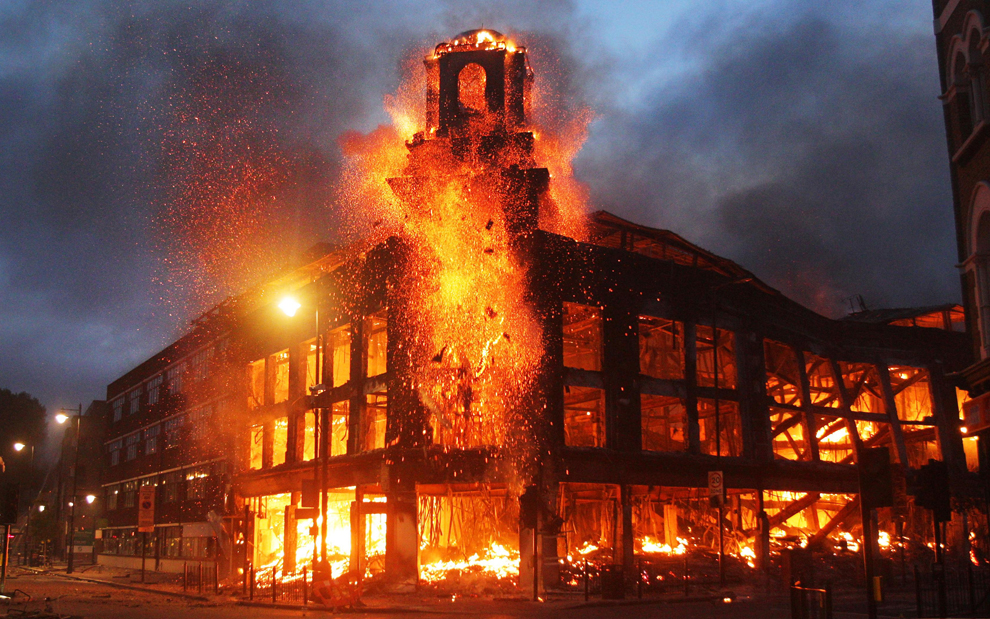 1. Crime is crime
As dramatic and interesting as a riot sounds, the terms only obscured the nature of the actions. Rioting and looting is simply another way of saying vandalism and theft. Obscuring the language however meant that rioting was sometimes used interchangeably with ‘demonstrating’ and ‘protesting’. These crimes were not political protests.
2. But even crime has causes.
There has been some tension in media analysis, especially from the left, in how to describe the rioters. In one sense, the rioters were certainly criminals causing unimaginable amounts of damage to local communities, they were thugs attacking people on the street and responsible for at least four deaths on the streets of the UK. On the other hand, commentators felt the need to locate the actions of the rioters in a wider political and social context. Is this about cuts? Is this about an ostracised community?
Well crime is crime, but even crime has causes. To say why one man killed another for example, does not undermine the crime itself. In the same way, we shouldn’t be shy about discussing what caused thousands of individuals to destroy and steal so much in their own towns and cities.
Poverty, social exclusion, broken-families... all these things no doubt have a part to play.
3. Justice and Mercy, not Justice and Vengeance.
There is an old Islamic axiom, that justice should be carried out with the objective of mercy. Yet it is human to desire justice for vengeance. After rioters quite literally pillaged through the streets of London, Birmingham and elsewhere – there were calls for more harsh punishments to be given out.
These include calls for the families of rioters to be evicted from their homes and an e-petition for rioters to lose their benefits.
This is a clear example of the very worst kind of ‘justice’. Justice here is not about righting what is wrong with the objective of compassion. It is giving about punishing simply for the sake of punishing. How will it help the 15 year old child involved in the riots to become a better individual by having him and his family kicked onto the streets?
And if the family of a rioter are on benefits (and not all of the rioters were, lest we descend into stereotypes about the poor being criminals); how will it help any of them to improve their situation, educate their child, and become productive members of society by losing their benefits?
Justice with the objective of vengeance is not justice at all, and the 100,000+ who signed the petition should be ashamed of themselves.
4. Call in the army, bring out the water cannons, load up the rubber bullets, where are the smoke grenades!?
A bizarre numbers of calls were made during the riots for increasingly harsh and tyrannical methods of policing to take place.
Lets make this clear – if you want stop riots, you need more police officers to uphold the law.
Our army and its involvement in wars in Iraq, Afghanistan and increasingly worrying UN presence in Libya cost the United Kingdom nearly £1billion a week. This is many many many times what we spend on officers. The police budget is roughly £9 billion annually and due to be cut significantly. We can do with fewer soldiers and more police officers any day of the week.
Now, as if the protests in Tunisa, Egypt, Syria, Libya and elsewhere were not enough to teach us – there are times when people need to protest and stand up against government.
There is a long tradition of protesting in the UK. But protests have been increasingly subject to aggressive and heavy-handed police tactics. The kettling that took place during the student protests last year are still fresh in my memory.
If the public calls for water cannons, rubber bullets and the like to be used for policing the streets during the riots today, then in all likelihood they will be used again in the future.
Yes, the rioters were criminals. No doubt about it.
But if next week 2 million Brits took to the streets of London to protest against the government like they did for the Iraq War in 2003. And instead of returning home after the protest, decided to camp down aorund Downing Street like the Egyptians did to Tahrir Square. Well then those 2 million Brits have become criminals, and subject to the same heavy handed tactics.
Call in the water cannons, the rubber bullets, the army!? Let's hope Britain never goes down that route.
NB: A better idea suggested by a friend however was to use ink stained paintball guns (they type of ink they use for elections that doesn’t rub off skin for a few days). Surely being publically recognisable would make them think twice, as well as making it much easier to trace rioters.
5. Don’t blame social media.
Cameron has indicated tougher measures on social media after rioters used the Blackberry Messenger Service to organise the riots.
Mr Cameron I hope realises riots took place in Britain well before the blackberry was ever used for emails and when twitter was simply the noise birds made.
Our liberty to use the internet should not be impinged upon by the government on such a paltry excuse.
6. The Positive Side
The riots were terrible, and a wake up call about the situation and morality of a large segment of our society who have no concern about upright behaviour and are willing to steal, damage and as we have seen, hurt others with little hesitation.
Yet, while rioters destroyed the streets during the nights, others spent their free time tidying up the mess the next day. Movements to clean the streets took place wherever there were riots, organised through Facebook and Twitter – they were a stark reminder that there are still plenty of people with social responsibility and solid moral standing.
Let’s not forget either the amazing scenes of community solidarity. Across London and Birmingham, while some youths were out rioting, other youths were protecting their streets from the rioters.
We were introduced us to Tariq Jahan, a man who displayed exemplary strength and compassion after his son and two others were killed protecting their community during the riots. In the month of Ramadan, the three boys opened their fast at sunset and then made their way to the local mosque for the tarawih prayers. After they finished, they along with dozens of others stood sentry outside the streets of their community conscious that rioters were being pushed out of the Birmingham city centre and into the suburbs. They were killed by a speeding car that seemed to drive straight for them, mounting the pavement to collide with the three. The family no doubt have suffered an immense loss. Yet they died in a holy month, after being engaged in prayer, in defence of their neighbours and friends. Few can hope to meet God with a more noble death.
All these should serve as reminders that despite the riots showing us a worrying underbelly of the today’s youth, there are still plenty of things to give us hope.
Saturday, 23 July 2011
Mourning
Human life demands dignity. It is the basis upon which almost all ethical traditions (religious or otherwise) are based upon. Life must be respected, given honour, and in turn, death too must be given its due - respect and honour.
Some deaths hurt us more than others, some deaths reach us at our very core. The loss of a parent, sibling or child is immeasurable. The Quranic statement that killing a single human being is akin to "killing all mankind" (5:32) is due to the value of that person to their family and friends; for a mother who has lost her child, none of the 6 billion plus human beings on earth can fill the void that was left by their son or daughter.
However, sometimes in death all we see is opportunity. Death becomes sanitised and we forget the pain and suffering it causes.
With regard to the terrorist attack in Norway - there is much to be said. Much to be said about the news corporations that covered it, the analysts that spoke about it, the reaction afterwards. Indeed there is also a lot to be said about the killer himself and his affiliations.
But I strongly feel that it can wait. What needs to be said can wait. The tradegy is barely a day old and already analysts and individuals are feasting upon it for their own purposes. For every child that was killed, there is a grieving parent whose life has been completely demolished. A moment of mourning needs be observed.
Likewise is the unfortunate trend of sanctimonious mourning. With the death of the celebrity Amy Winehouse - some feel outraged that a celebrity should be mourned when there are dead in Norway. Others comment that why should Norway be mourned while there is famine in East Africa. This feels to me disrespectful to all deaths involved. It is as if we completely forget the value of a human life, and have lost sense of what it means to truly mourn.
Death is the most human of all experiences, and touches all - religious and otherwise - as being the cusp of the very unknown. Analysis and post-analysis can wait a few moments; while we remember and respect the value of human life and afford it the dignity it deserves.
Some deaths hurt us more than others, some deaths reach us at our very core. The loss of a parent, sibling or child is immeasurable. The Quranic statement that killing a single human being is akin to "killing all mankind" (5:32) is due to the value of that person to their family and friends; for a mother who has lost her child, none of the 6 billion plus human beings on earth can fill the void that was left by their son or daughter.
However, sometimes in death all we see is opportunity. Death becomes sanitised and we forget the pain and suffering it causes.
With regard to the terrorist attack in Norway - there is much to be said. Much to be said about the news corporations that covered it, the analysts that spoke about it, the reaction afterwards. Indeed there is also a lot to be said about the killer himself and his affiliations.
But I strongly feel that it can wait. What needs to be said can wait. The tradegy is barely a day old and already analysts and individuals are feasting upon it for their own purposes. For every child that was killed, there is a grieving parent whose life has been completely demolished. A moment of mourning needs be observed.
Likewise is the unfortunate trend of sanctimonious mourning. With the death of the celebrity Amy Winehouse - some feel outraged that a celebrity should be mourned when there are dead in Norway. Others comment that why should Norway be mourned while there is famine in East Africa. This feels to me disrespectful to all deaths involved. It is as if we completely forget the value of a human life, and have lost sense of what it means to truly mourn.
Death is the most human of all experiences, and touches all - religious and otherwise - as being the cusp of the very unknown. Analysis and post-analysis can wait a few moments; while we remember and respect the value of human life and afford it the dignity it deserves.
Monday, 18 July 2011
The Life of Muhammad: Mixed Reactions

From what I gather from my non-Muslim friends on Twitter, Facebook and face-to-face interactions – all are very much enjoying the BBC’s Life of Muhammad documentary.
From what I gather from my Muslim friends on Twitter, Facebook and face-to-face interactions – all are very much disappointed at the BBC’s Life of Muhammad documentary.
It is wonderful to have a generally sympathetic portrayal of the Prophet Muhammad on national TV in a prime-time slot. A great opportunity to share the man and message so close to the heart of billions of Muslims.Yet it still isn't quite right. Several things just fail to hit the mark.
The first is its insistence on linking modern day events with the biography. Yes, the Satanic Verses, 9/11 and the Israel-Palestine conflict are all important issues regarding Muslims today. But you can’t miss out 1400 years of history. Quite obviously the Israel-Palestine conflict has more to do with the millions of Palestinian refugees that lost their homes and land upon the creation of the state of Israel in 1948 than al-Israa wal-Miraaj (the Prophet's journey to Jerusalem and beyond). Something that isn’t conveyed in the documentary.
An older American documentary, Muhammed: Legacy of a Prophet did the same thing. But instead of contextualising the life of the Prophet with 9/11 or such, it used the day to day lives of modern Muslims – doctors, lawyers and so on. To hear from Muslims about how a specific event in the life of the Prophet resonated with them, or made them who they are felt more intimate and more meaningful. It also made a lot more sense then trying to link complex global issues to a single incident from the life of the Prophet.
The next issue is the choice of commentators. One commentator was Robert Spencer, a very well known anti-Islam commentator who founded and runs the website Jihad Watch. To give you a sense of Jihad Watch’s paranoia – it accuses a dodgy kebab shop in Cardiff of being al-Qaeda trained terrorists. Like seriously, click the link, they actually say it! And this guy is a commentator on the show? Bizarre. The line up also includes Nonie Dariwsh, Director of Former Muslims United. An ex-Muslim was given more speaking time on the Prophet Muhammad than Tariq Ramadan, a prominent Muslim scholar.
I can totally understand the need for impartial and unbiased (if such a thing exists) commentators, in the form of academics and experts – but how can Robert Spencer and Nonie Darwish be justified?
A final issue that bugs me is choice of content. You have 23 years during which the Prophet Muhammad was active as a preacher and reformer of society. In a documentary of three hours, there is naturally a need to highlight certain important incidents; so no one expects everything to be covered.
But for many Muslims, this documentary misses out a lot of the important stuff. Important first in understanding who was Muhammad, and important in understanding who are Muslims.
For example, the suffering and persecution faced by the Prophet in Makkah is mentioned only in passing. Yet this shaped so much of the Prophet’s experiences, and is such an important aspect of the Prophetic story for Muslims. In the face of torture and punishment, all the early Muslims stood steadfast in their faith, adhering to the Quranic injunction of ‘sabr’, patience. To overlook this is to miss the foundation of the Prophetic biography.
Another aspect I was looking forward to in the second part of the documentary, that was barely mentioned, was how the Prophet united the tribes of Madinah. So much of the Islamic understandings of unity, brotherhood (of humanity and Muslims), sacrifice, asceticism and so on stem from the importance of Madinah, yet it was barely looked at.
Instead the documentary tends to focus on the controversial. When discussing Makkah and the Constitution of Madinah, the documentary is keen to mention historians who argue both didn't even exist. When it comes to the controversial issues however, the Banu Quraizah for example, the documentary seems less concerned with historical debate and is content to accept a single narrative around the issue.
Finally, a documentary that tries to look at the life of the Prophet but that omits his relationship to God will always fall short. Even from a critical, atheist position; his relationship to God is paramount to understanding the Prophet. Karen Armstrong is the one commentator who reminds us of this. She understands how central it is to the story.
Overall, it still feels like this documentary is struggling to break free of Western Orientalism. The issues it focuses on, the way the Prophet is presented, the questions asked; they all mimic previous Orientalist studies of the Prophet.
Yet ultimately, I have to remind myself and perhaps other Muslims that this documentary is step in the right direction. So little knowledge exists in the public realm about the Prophet Muhammad, that anything is better than nothing.
Wednesday, 6 July 2011
Islamism: What are you talking about?
There is one word that has become increasingly popular in media, political and academic discourse of late – Islamism.
No other words however annoy me as much.The word is redundant. It can mean absolutely anything.
In media and political discourse – Islamism is pretty much synonymous with “bad Muslim” – the evil, extremist, terrorist, ‘fanatic in the attic’ Muslim; more often than not, it is used as a slur.
In more refined quarters, it is used to refer to the Muslim Brotherhood and groups inspired by it, or used as an equivalent to the equally pointless term ‘political Islam’.
The fallacy of Islamism is perhaps best demonstrated by Wikipedia, which hosts no less than nine definitions.
At its mean – a word should convey some shared understanding to allow communication of ideas between people. Islamism does not fulfil this criterion.
If Islamism is the philosophy and ideas of the Muslim Brotherhood, then it needs to be restricted to this and not diluted by refering to a host of other groups with sometimes radically different beliefs than the Brotherhood (for example, Saudi Arabian Salifiyyah are often referred to as Islamist despite stark differences).
If Islamism is to refer to ‘political Islam’ then this should be done with integrity and intellectual honesty. ‘Political Islam’ can not be considered a new movement (as if Islam has made no political claims prior to the twentieth century). Nor can it be restricted to describe only one end of the political spectrum. To be sincere in this definition then, we must also describe British Muslims for Secular Democracy as Islamists.
Finally, if Islamism is to refer to the bogeymen of Islam as it is often in the media and even our Prime Minister, then we must have an honest conversation about what ‘Islamism’ is and what makes it a problem. It is unacceptable to bandy about Islamism as a slur and an insult with no further thought, simply replacing Marxist/Marxism as the new threat to modern society.
Ultimately, I think academia, the media and polity would do better to abandon the word altogether – though I welcome someone to prove me wrong.
Monday, 6 June 2011
Time for the truth about Terrorism
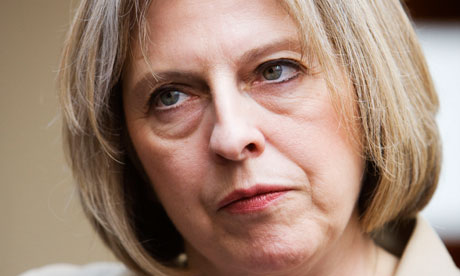
The government is soon to present and release its new counter-terrorism PREVENT policies, headed by Theresa May.
Early signs seem to indicate that the government is yet to face the clear and obvious truth about what it deems to be ‘violent extremism’.
It still seeks to place it as being a religious problem (thus terming it ‘religious extremism’).
Sloppy language is employed about the motivations of terrorists – ‘they hate our way of life’, ‘they hate our freedoms’ claim politicians and pundits.
Focus is repeatedly put on the Muslim community for not doing enough to tackle extremism. The government asks academics and doctors to spy on their students and patients.
Millions of pounds of funding has been thrown carelessly at tackling extremism, giving rise to a anti-terrorist industry with self-proclaimed experts awarding themselves £80,000 salaries and creating a competitive environment where each organisation decries the other in attempts to get a bigger share of the pie.
All this because the government refuses to acknowledge the most basic and obvious fact about terrorism. Something that is clear and common knowledge to not only the Muslim community, but to MI5 bosses and CIA advisors. Yet the government (whether Labour or Conservative, Bush or Obama) refuses to accept the evident truth.
Terrorism (itself a messy ill-defined word) is the result of, motivated by, and seeks to end,  Western imperialism. Terrorist groups only make sense as anti-colonialist movements.
It is not a religious movement, but it articulates itself in the dominant social medium of religion. Terrorism, which I prefer to call theologically justified political violence, is just that. It is political violence, its aim is to achieve a political result. It is not born out of a religious belief, but uses religion to justify itself in a social context where all claims, to be taken seriously, must be religious.
In the recent Arab Spring, the double standards of the governments of Britain and the USA were made clear. While hundreds of thousands took to the streets of Egypt against Mubarak, the USA was shamefaced about its $3,000,000,000 annual funding to the Egyptian Army which killed Egyptian protestors.In Libya, Britain suddenly switches sides to support the revolutionaries fighting against Gaddafi. Gaddafi’s forces meanwhile use military equipment sold to them by Britain against its own people.
This is in a wider context of military occupation of Iraq and Afghanistan, in bloody wars that 'raised [the] terror threat' rather than reducing it.
To begin tackling the threat faced by extremists in earnest, the British government, Theresa May, David Cameron and like must all own up to the cause of terrorism. It is perhaps best said in the words of Michael Scheuer, former head of the CIA's Bin Laden Unit: -
Mr Scheuer said: "We are being attacked in the west and we will continue to be attacked in the west as long as we are in Afghanistan, as long as we support the Israelis, as long as we protect the Saudi police state.
In the rhetoric of our enemies there is very little, if anything, about attacking us for how we live or how we think or how we act in our own country.
It is about intervention, it is about being in the Arab Peninsula and it has nothing to do with these cultural things."
Saturday, 9 April 2011
Some Reflections

It’s almost exactly a year since the passing of a very dear brother, Aamir Siddiqi.
Aamir was only seventeen at the time; he had been accepted to study Law in Cardiff University and had a bright future ahead of him. Many people in Cardiff knew him, and all who knew him respected and liked his kind and honest nature.
On Sunday 11th April 2010, he was killed in his home. He answered the door, expecting his Arabic teacher as usual, but instead two men entered his house, stabbed Aamir to death and injured his elderly parents who were also present. They ran away leaving Aamir to die. Two men were later arrested, with a third still being sought in connection with the murder. The killing was senseless, a case of mistaken identity.
It’s incredibly painful to write about this, painful even more thinking of his parents and family who the lost the apple of their eyes and must be keenly aware of the time since his death.
As always, there is only one thing to say when reflecting on the passing of a human soul. “Surely we are from God, and to Him we return”. The statement is neither a sober statement nor one of sadness. It’s a statement of hope. Our primordial origin is not except with “the breath of God” who created us, and our home and final destination is to return to our origin – of closeness to the transcendent one beyond all description.
There are so many lessons we can take from Aamir’s death, and many that I’ve learnt. I wanted to share some of them.
The days after his death, I was struck with one major regret. I am not usually the type to have regrets, but this regret was one that took me some time to recover from. I knew Aamir from SOBIS (School of Basic Islamic Studies). I teach there, and he had studied there from a young age. In the months before his death, I would often see him and greet him and speak briefly, but never fully. Aamir had a beautiful character, and he would take interest in other people. He knew I studied theology at University, and would often ask me questions about it; I suspect partly out of interest (he was the very definition of a polymath) and partly out of politeness and courtesy. I remember quite a few times in the months before his death he asked me about my opinion on materialism, and I never answered the question. I would always respond with something along the lines of ‘another time’, distracted by whatever needed to be done next in the busy and hurried environment of SOBIS. It seems like a silly regret to not answer a question, but he had asked me several times, and I always expected another opportunity to arise. It wasn’t that the answer was important (I don’t even think I have an opinion on materialism), but I regret not taking the time to just talk and spend time with Aamir, even if it was just for a few minutes. My exchanges with Aamir for too long consisted of brief ‘salaams’ and casual quick conversation. Having lost the opportunity to do so with Aamir, I have tried my best to stop having the empty conversations you have in a day, and make the most of every exchange. Even if it’s simply to say “peace be upon you/asalaamu alaykum” with sincerity – not as a mindless greeting but a genuine wish for good upon that person.
The Prophet Muhammad (peace be upon him) taught us that “death is a sufficient as admonition”, meaning that the person who reflects upon the phenomena of death is certain to learn the lessons needed for success in this life and the next life. We construct around us a sense that death is a distant destination, one that doesn’t quite apply to us. We entertain what certain scholars define as the ‘long hope’ – others will die but not myself – somehow I’ll live forever. We rarely focus upon our end destination, and thus our purpose in this life. Life is the longest thing we know, yet the few decades we may live on this earth seem so short. In April last year I was in the midst of my final year essays and revision. I was working full-time, and studying full-time, and so life consisted of early starts and late nights. After I found out about Aamir’s death, and after the initial rush of emotions had passed, I returned to my desk and continued working on my essay feeling utterly numb. Studying and working and all that I did seemed suddenly very very futile. I was so busy during that time, ‘filling the unforgiving minute with sixty seconds worth of distance run’, yet the simply question of where I was running to suddenly fell into sharp focus. I had said, as soon as I heard of Aamir’s death, ‘surely we are from God, and to Him we return’, but I knew I was far from internalising the belief. A year after Aamir’s death, I find myself sitting again at a desk with half a dozen books by my side with an essay deadlines approaching. I’ve certainly travelled the distance of a year, but I fear whether I’ve travelled any distance closer to God, and whether I’ve truly let go of the ‘long hope’ that although others die, I won’t. Thinking of Aamir always reminds me that he was my friend and my peer in this life. His time was simply slightly ahead of mine, but I’m soon to follow. I have the benefit of life yet on this earth, and God knows how long it will. For myself and for others, Aamir should remind us that our life is simply a few years granted to unravel the mysteries of our soul and grow as close to God as we can.
In focusing on Aamir’s death, I hope I have done him no injustice. He was someone full of life. Some of the best memories I have of Aamir will always be from filming a video produced for one of SOBIS’s annual functions. If you can spare ten minutes, I’d encourage everyone to watch. It features Aamir and his classmates and I think it shows some of his wonderful character, if ever so briefly. The video is called 'What Does Islam Teach You?'
If you’re reading this, I hope you’ll take a few moments to read al-Fatiha for Aamir, and pray for him and his family. I have witnessed daughters bury their mothers, and sons bury their fathers, and the agnony that is causes. But I have only ever once seen a mother and father bury their son and Aamir’s parents did so with such dignity and strength of character that I am left in awe. May God strengthen them and their family now and forever, for what is such a difficult time.
I do pray that when I pass, I am reunited with Aamir in the best and most blessed of places, and that we finally have that discussion about materialism – which I imagine will be ever the more interesting with the benefit of retrospect.
Subscribe to:
Posts (Atom)